Is Poultry Farming a Good Investment in 2026? A Complete Investor Guide
20 Aug 2026 United States
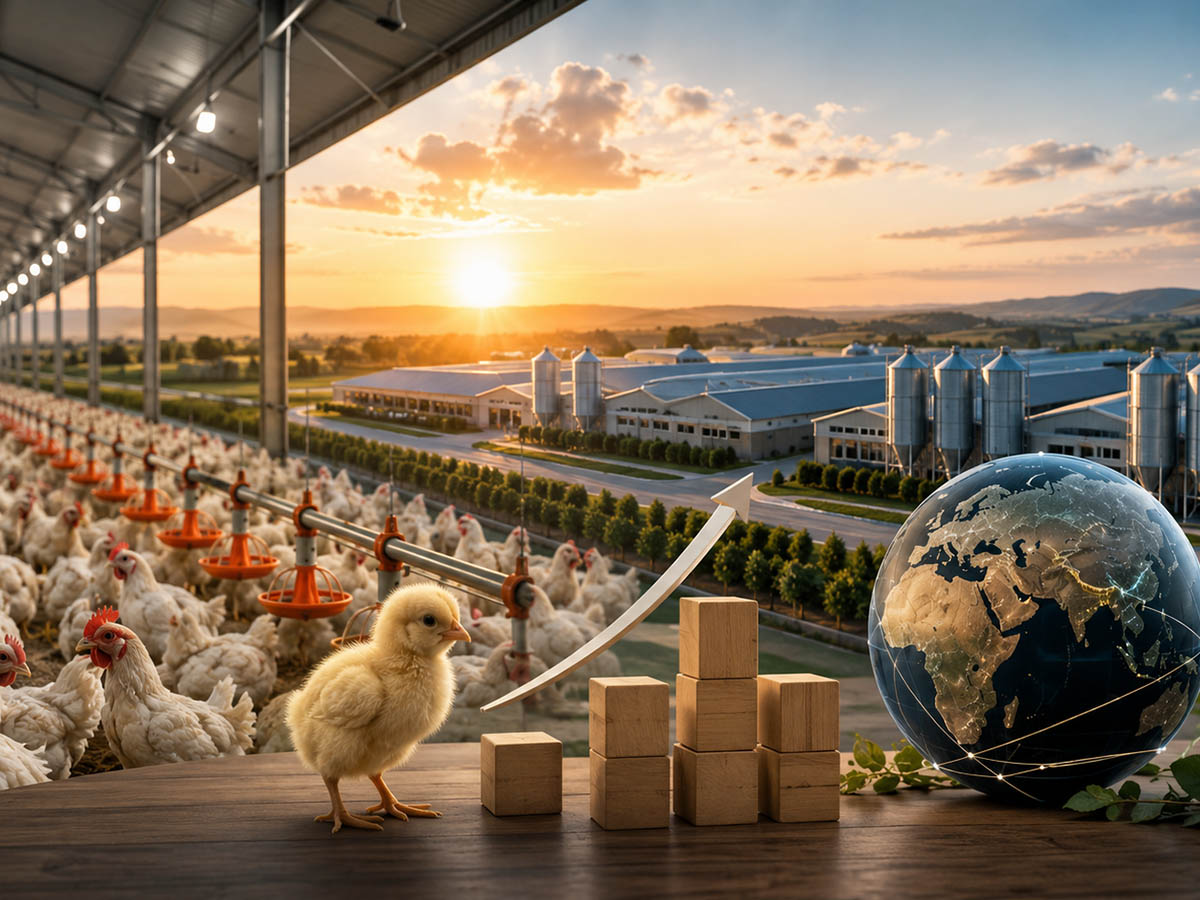
As investors search for opportunities beyond property, equities and traditional financial assets, agriculture is receiving renewed attention. Within this sector, one question is becoming increasingly common: is poultry farming a good investment in 2026?
The answer depends on the investment model, location, management quality and production structure. However, the fundamentals behind modern poultry farming remain compelling. Global demand for affordable animal protein continues to grow, commercial farms are becoming increasingly automated, and professionally managed investment models are making the industry more accessible to investors without agricultural experience.
Recent market data supports this broader trend. The OECD-FAO Agricultural Outlook 2026–2035 expects global agricultural and fisheries production to expand by around 13% over the coming decade under stable conditions, largely through productivity improvements. It also highlights an ongoing shift towards poultry consumption in higher-income markets.
Poultry farming, therefore, is no longer simply a traditional agricultural business. Modern broiler production increasingly operates as a technology-driven food production industry.
Why Poultry Farming Is Attracting Investors in 2026
The investment case for poultry begins with something remarkably simple: people need food regardless of economic conditions.
Consumer spending on property, vehicles, luxury products or technology can change significantly during periods of uncertainty. Demand for food behaves differently. Population growth, urbanisation and changing dietary habits continue to support global demand for accessible sources of protein.
Poultry is particularly well positioned within this trend.
Chicken is relatively affordable compared with many other animal proteins and is consumed across a wide range of countries, cultures and dietary preferences. Previous OECD-FAO projections estimated that poultry would account for 62% of the additional meat consumed globally through 2034, illustrating the important role poultry is expected to play in future protein consumption.
Current production trends also demonstrate the industry's scale. In its June 2026 outlook, the USDA projected US broiler production at approximately 49.4 billion pounds for 2026, around 2.9% higher than 2025.
For investors, these trends matter because poultry farms are production-based assets.
A poultry facility is not designed simply to sit on land and appreciate over time. Its purpose is continuous commercial production. Each production cycle uses specialised infrastructure, technology and professional management to supply an established food market.
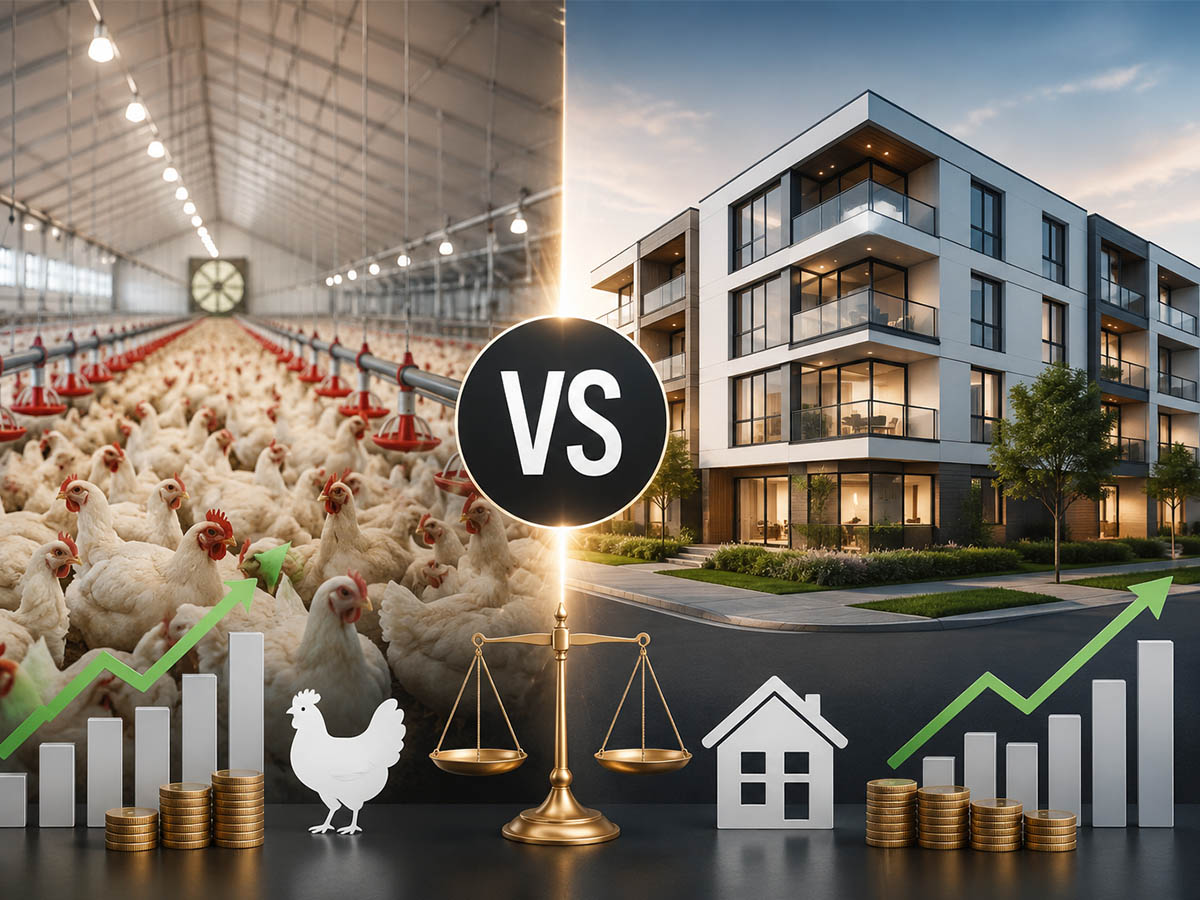
That creates a fundamentally different investment proposition from assets whose performance depends primarily on resale value or market appreciation.
How Modern Poultry Farm Investment Works
One of the biggest misconceptions about poultry investment is that an investor needs to become a farmer.
Modern commercial poultry production can operate very differently.
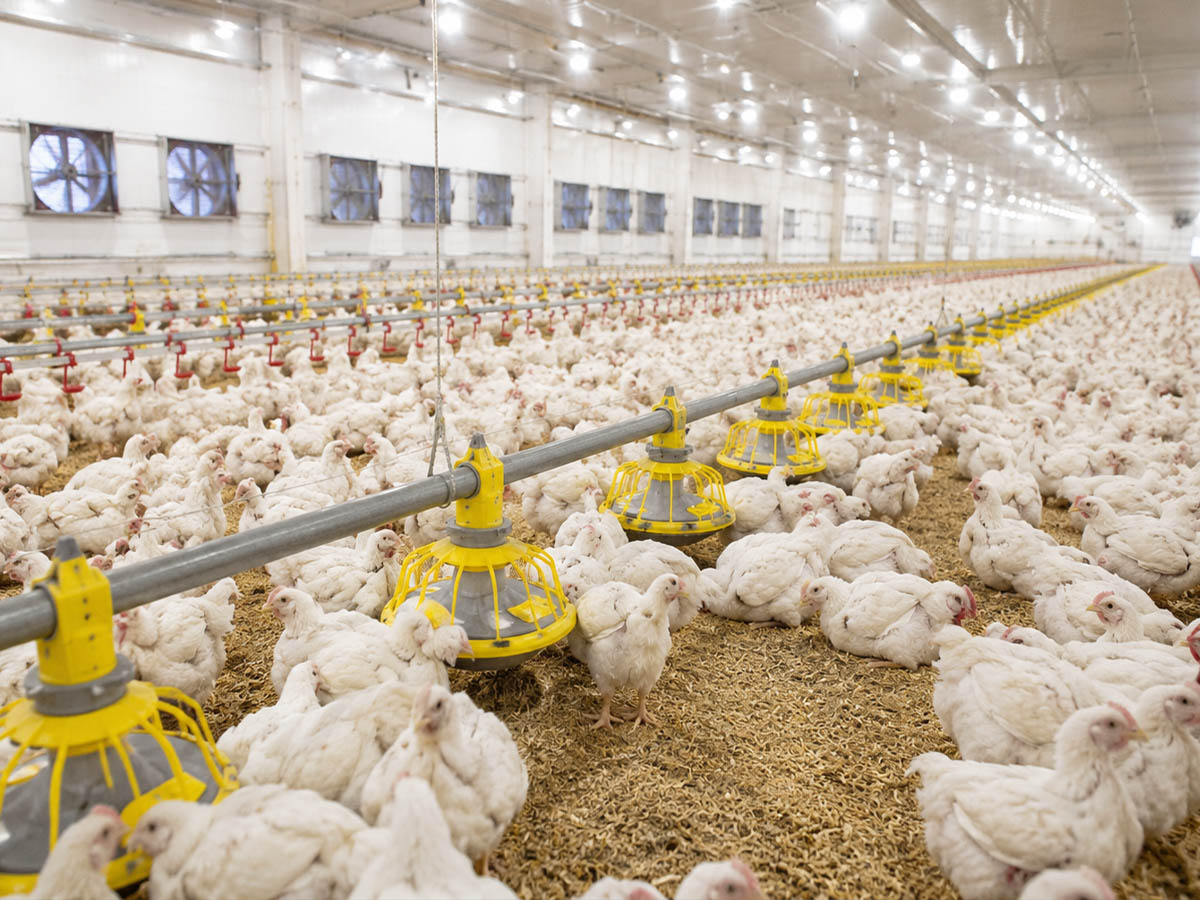
Large-scale broiler facilities increasingly rely on sophisticated infrastructure and automation. Climate, ventilation, feeding, drinking water and environmental conditions can be monitored and managed systematically.
A modern facility may include:
- Automated feeding and drinking systems
- Climate-controlled poultry houses
- Intelligent ventilation
- Environmental sensors and monitoring
- Backup power infrastructure
- Automated production equipment
- Strict biosecurity systems
- Data-driven production management
Technology helps create consistent production conditions while reducing unnecessary human error.
The relatively short production cycle of broilers is another important characteristic of the industry. USDA research notes that broilers have significantly shorter production cycles than cattle or pigs and can be ready for production within weeks rather than years. Broilers also benefit from comparatively efficient feed conversion.
For investors, however, infrastructure alone is not enough.
Professional management is one of the most important factors determining whether a poultry investment succeeds.
Experienced operating teams can manage environmental conditions, animal welfare, maintenance, biosecurity, production monitoring and other day-to-day responsibilities.
This is where professionally managed poultry investment models become particularly interesting.
Instead of building a farm and personally running the operation, an investor can own a productive agricultural asset while specialised teams manage the operational side of the business.
In some markets, farms may also operate through contract farming arrangements with established poultry integrators. Depending on the agreement, integrators can coordinate elements such as chicks, feed, veterinary programmes and production standards.
The result is a more structured production model than independent farming.
What Makes a Poultry Farm a Good Investment?
Not every poultry farm automatically represents a good investment.
The difference between a strong project and a weak one often comes down to infrastructure, location, management and the commercial model behind the facility.
Investors should evaluate several important factors.
Location and infrastructure
Commercial poultry production requires access to transport networks, feed suppliers, technical services and established industry partners. Location can therefore have a significant impact on operational efficiency.
Modern production technology
Automation and environmental control systems are increasingly important. A professionally designed facility should allow production conditions to be monitored and optimised throughout each cycle.
Biosecurity
Disease prevention remains one of the most important operational considerations in poultry farming. Controlled entrances, sanitation procedures, cleaning protocols, water management and disciplined staff procedures should form part of a comprehensive biosecurity system.
Professional management
A modern building does not guarantee successful production. Experienced operators are essential for maintaining equipment, managing environmental conditions and following production protocols consistently.
A clear commercial model
Investors should understand exactly how the farm generates revenue, who operates it, how production is organised and what contractual relationships exist.
These factors matter far more than simply purchasing agricultural land and constructing poultry houses.
A successful poultry investment should be viewed as an integrated production business rather than a standalone property asset.
Is Poultry Farming a Good Long-Term Investment?
For the right investor and under the right operational structure, poultry farming can represent an attractive long-term agricultural investment.
Its greatest strength is its connection to an essential industry.
Global food demand is not disappearing. In fact, the latest OECD-FAO outlook emphasises that rising incomes and urbanisation are continuing to increase demand for animal-source foods in many middle-income economies.
At the same time, poultry production has several characteristics that distinguish it from other livestock sectors: relatively short production cycles, efficient feed conversion, established global demand and the ability to integrate automation throughout the production process.
But investors should avoid viewing poultry farming as a guaranteed-return investment.
Agricultural production carries genuine risks. Energy and feed costs can fluctuate. Disease outbreaks can affect operations. Equipment requires maintenance. Production performance depends heavily on management quality. Regulatory and market conditions can also change.
The OECD and FAO themselves warn that agricultural markets remain exposed to volatility from energy costs, geopolitical disruptions and other shocks.
This makes due diligence essential.
Investors should examine the physical facility, management structure, production model, biosecurity programme, operating costs and contractual arrangements before committing capital.
The strongest opportunity is therefore not simply "investing in chickens".
It is investing in modern food production infrastructure.
Professionally developed poultry farms combine land, buildings, automation, technology, management and repeated production cycles within a single productive asset.
That combination is what makes the sector particularly interesting in 2026.
Final Thoughts
So, is poultry farming a good investment in 2026?
For investors looking for exposure to agriculture, food production and tangible productive assets, modern poultry farming deserves serious consideration.
The sector benefits from long-term global protein demand, relatively efficient production cycles and continuous advances in automation and farm management. Current international agricultural outlooks also point towards continued growth in food production and a significant role for poultry within future meat consumption.
However, the quality of the investment matters.
A professionally designed and managed poultry production facility is very different from an independently operated traditional farm. Technology, biosecurity, experienced management and a structured production model can significantly influence operational performance.
For international investors seeking diversification beyond traditional asset classes, professionally managed poultry farming provides an opportunity to participate directly in one of the world's most essential industries: food production.
In 2026 and beyond, that combination of tangible assets, modern technology and continuous global demand is precisely why poultry investment is attracting increasing attention.
Frequently Asked Questions
Is poultry farming profitable in 2026?
Poultry farming can be profitable, but performance depends on factors including production efficiency, operating costs, management quality, biosecurity and the commercial structure of the farm. Investors should assess each project individually rather than relying on general return assumptions.
Do I need farming experience to invest in poultry?
Not necessarily. Professionally managed poultry investment models allow experienced operational teams to handle the daily technical and production responsibilities while the investor owns or participates in the underlying agricultural asset.
Why is poultry attractive compared with other livestock sectors?
Broiler production benefits from relatively short production cycles, efficient feed conversion and widespread global demand for chicken as an affordable source of animal protein.
What are the main risks of poultry investment?
Important risks include disease, feed and energy costs, equipment failures, poor management, changing regulations and market conditions. Strong biosecurity, modern infrastructure and experienced professional management can help reduce operational risks, but no agricultural investment is risk-free.
Is managed poultry farming suitable for international investors?
It can be particularly suitable for investors who want exposure to agricultural production without personally operating a farm. The quality of the management company, ownership structure and production agreements should always be carefully reviewed before investing.