Poultry Farm Investment Cost in Turkey (2026): What Every Investor Needs to Know
26 Jun 2026 United Kingdom
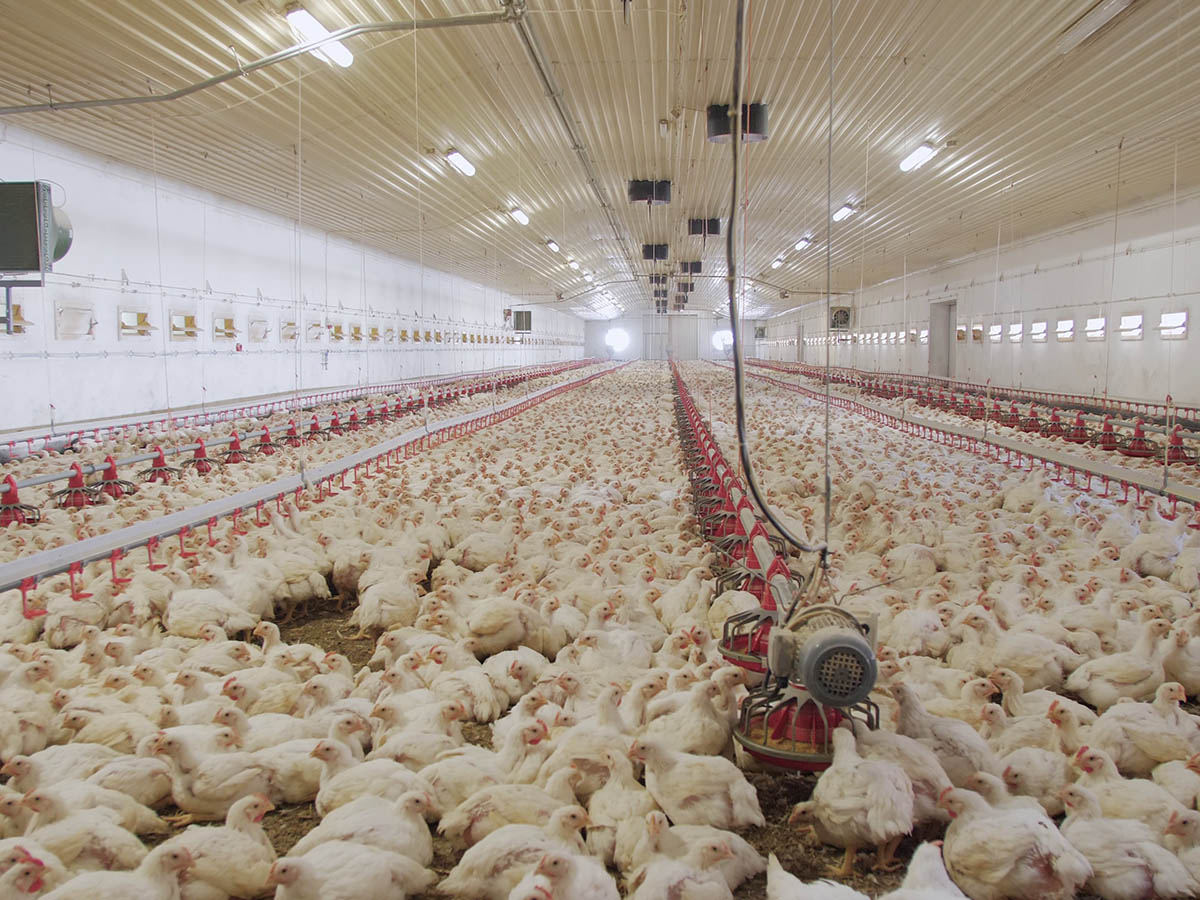
Food production has become one of the most resilient investment sectors in the global economy. As populations continue to grow and demand for affordable protein increases, poultry farming remains one of the strongest agricultural industries for long-term investors. Before entering the sector, however, understanding the poultry farm investment cost is essential.
The total investment required depends on several factors, including farm size, production capacity, technology, land, and operational structure. While some investors choose to build a poultry farm from scratch, others prefer professionally managed integrated projects that reduce risk and simplify operations. In this guide, we'll explore the major cost components, expected returns, and why Turkey has become an attractive destination for poultry investments in 2026.
Understanding Poultry Farm Investment Cost
There is no universal answer to the question, "How much does a poultry farm cost?" Investment requirements vary significantly depending on the production model and the investor's objectives.
A small family-operated poultry farm may require a relatively modest budget, while a commercial-scale operation designed for thousands of birds involves substantially higher capital expenditure.
The main cost categories typically include:
- Land acquisition or leasing
- Construction of poultry houses
- Ventilation and climate control systems
- Feeding and watering equipment
- Electrical and water infrastructure
- Biosecurity systems
- Livestock purchase
- Feed inventory
- Labour costs
- Veterinary services
- Licensing and regulatory compliance
- Working capital for ongoing operations
Many first-time investors underestimate the importance of operational expenses. While construction represents a significant initial investment, long-term profitability depends heavily on efficient management and production performance.
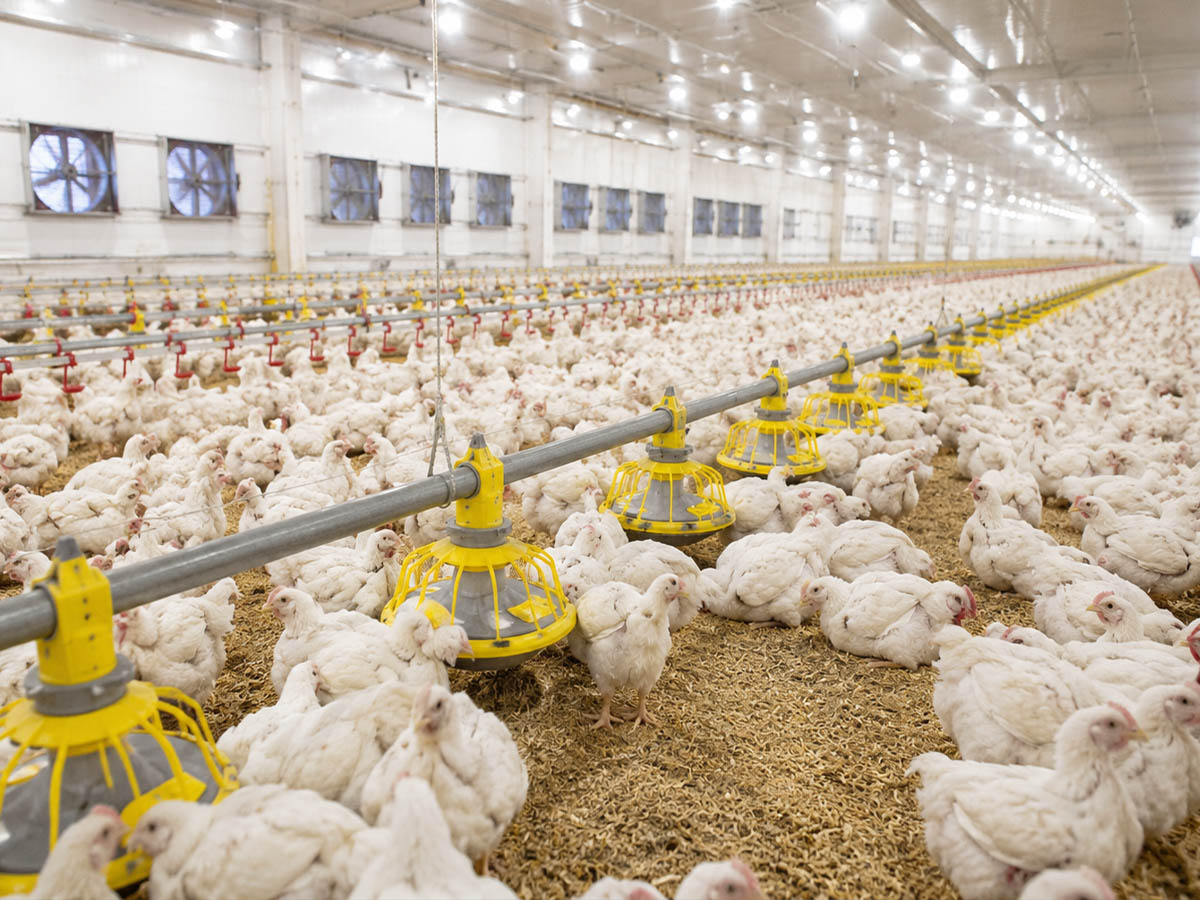
Modern poultry farms increasingly rely on automation, reducing labour requirements while improving animal welfare and production consistency.
Factors That Influence Poultry Farm Investment Costs
Several variables directly affect the total investment required.
Farm Capacity
The number of birds determines almost every aspect of the investment.
Larger farms require:
- Bigger poultry houses
- Higher-capacity feeding systems
- More advanced ventilation
- Larger storage facilities
- Additional biosecurity measures
Although larger farms cost more to establish, they often benefit from economies of scale, lowering production costs per bird.
Technology Level
Today's commercial poultry farms are far more advanced than traditional operations.
Automated systems can include:
- Climate monitoring
- Automatic feeding
- Automatic watering
- Environmental sensors
- Smart ventilation
- Remote management software
While these technologies increase the initial investment, they typically improve production efficiency and reduce long-term operating costs.
Construction Standards
Building quality also affects investment costs.
High-quality insulated poultry houses help maintain stable temperatures throughout the year, reducing energy consumption and improving flock performance.
Modern buildings also last longer and require fewer maintenance expenses over time.
Location
Land prices vary considerably between regions.
Turkey offers several advantages compared with many European countries:
- Lower land acquisition costs
- Competitive construction costs
- Skilled agricultural workforce
- Strong logistics infrastructure
- Access to European, Middle Eastern, and Asian markets
These advantages help reduce the overall poultry farm investment cost while maintaining international production standards.
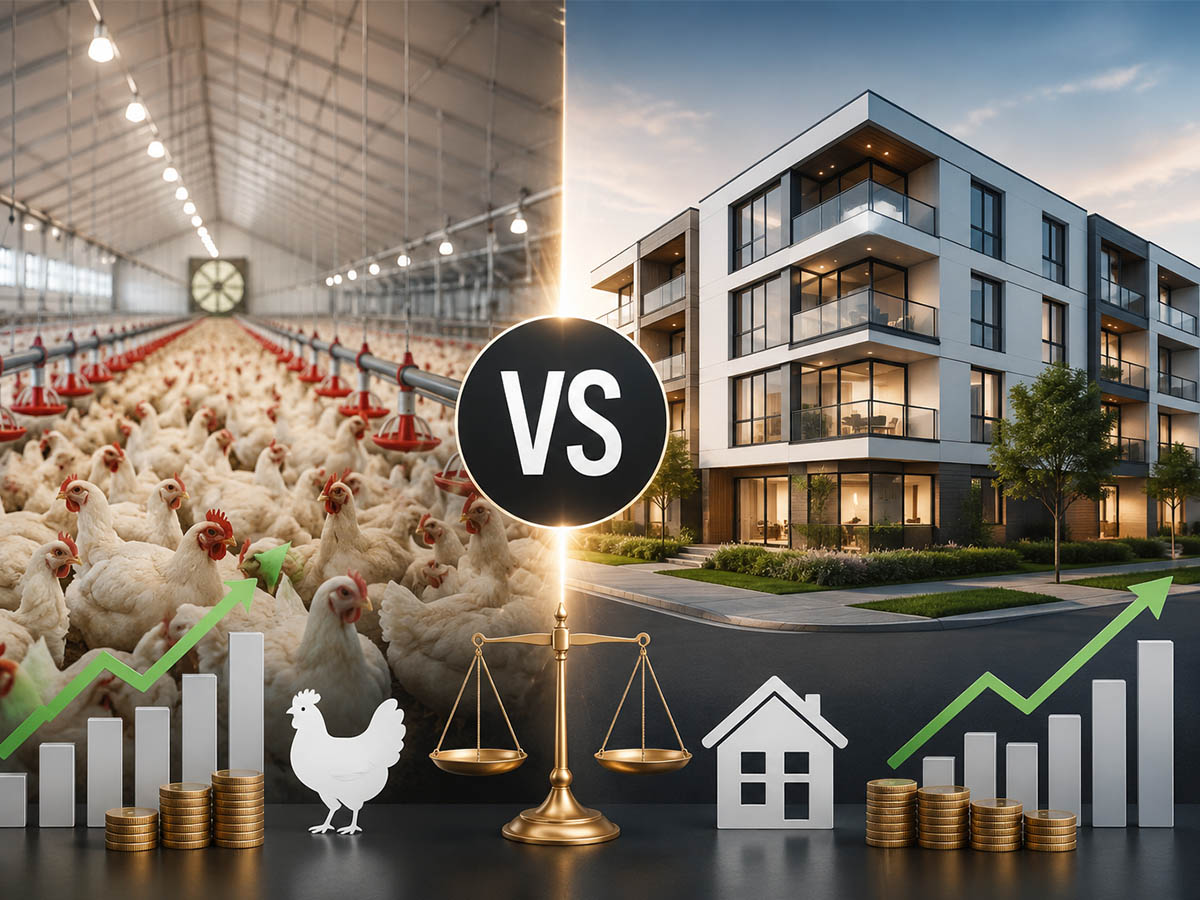
Building Your Own Farm vs Investing in an Integrated Poultry Project
Investors generally choose between two approaches.
Option 1: Building a Farm from Scratch
This route provides complete control over the project.
However, it also involves significant responsibilities:
- Purchasing land
- Obtaining permits
- Hiring architects
- Managing construction
- Purchasing equipment
- Recruiting staff
- Establishing supplier relationships
- Managing production
- Marketing products
Unexpected delays and budget overruns are common during development.
Construction timelines may extend for months before production begins.
Option 2: Investing in an Integrated Poultry Production Project
An increasingly popular alternative is investing in professionally developed poultry production complexes.
These projects often provide:
- Ready-built production units
- Professional farm management
- Veterinary support
- Feed supply systems
- Technical maintenance
- Biosecurity management
- Production monitoring
- Centralised operations
Instead of managing every operational detail, investors own production assets while experienced teams oversee day-to-day activities.
This model can significantly reduce operational complexity, particularly for international investors with limited agricultural experience.
Ongoing Operating Costs Every Investor Should Consider
Initial construction costs represent only part of the investment.
Successful poultry farming also requires careful management of recurring expenses.
Feed Costs
Feed is typically the largest operating expense.
Depending on market conditions, feed may account for more than half of total production costs.
Efficient feed conversion ratios are therefore critical for profitability.
Energy Consumption
Modern poultry houses require:
- Heating
- Ventilation
- Cooling
- Lighting
- Automation systems
Energy-efficient buildings and equipment help reduce long-term operating expenses.
Labour
Although automation has reduced labour requirements, skilled employees remain essential.
Personnel may include:
- Farm managers
- Animal care staff
- Maintenance technicians
- Veterinary professionals
- Administrative personnel
Professional management contributes directly to production performance.
Animal Health
Preventive healthcare is a key part of commercial poultry production.
Routine vaccinations, veterinary inspections, and strict biosecurity measures help minimise disease risks and production losses.
Healthy flocks generally achieve better feed conversion, lower mortality rates, and stronger overall profitability.
Why Turkey Is Becoming a Leading Destination for Poultry Investments
Turkey has emerged as one of the region's most attractive agricultural investment markets.
Several factors contribute to this position.
Strategic Location
Turkey connects Europe, Asia, and the Middle East, allowing efficient access to multiple export markets.
This geographical advantage supports both domestic sales and international trade.
Growing Food Demand
Global demand for poultry meat continues to rise due to its affordability, nutritional value, and broad consumer acceptance.
Long-term demographic trends suggest that protein consumption will continue increasing over the coming decades.
Competitive Production Costs
Compared with many Western European countries, Turkey offers:
- Lower construction costs
- Competitive labour expenses
- Strong agricultural infrastructure
- Extensive farming expertise
These advantages help improve investment efficiency.
Industrial Agriculture Development
Turkey has invested heavily in organised agricultural production zones.
These integrated developments combine infrastructure, logistics, veterinary services, and professional management into large-scale production ecosystems designed for efficiency.
Such projects provide investors with opportunities that would be difficult to replicate independently.
What Kind of Returns Can Investors Expect?
Every investment carries risk, and poultry farming is no exception.
Profitability depends on multiple factors, including:
- Production efficiency
- Feed prices
- Market demand
- Disease management
- Operational quality
- Sales channels
Well-managed commercial farms generally benefit from relatively stable demand because poultry remains one of the world's most affordable protein sources.
Integrated production models can also help reduce operational volatility by centralising purchasing, technical support, and management expertise.
Investors should always evaluate projected cash flow, expected production capacity, management structure, and long-term operating strategy before making an investment decision.
Rather than focusing solely on the lowest startup cost, experienced investors often prioritise projects that demonstrate sustainable operational performance over many years.
Choosing the Right Poultry Investment Opportunity
Selecting the right project involves much more than comparing prices.
Before investing, consider the following questions:
- Is the project professionally managed?
- Are modern production technologies being used?
- Does the project include strong biosecurity measures?
- Is technical support available?
- Are operational responsibilities clearly defined?
- What is the expected production capacity?
- How transparent are financial projections?
- Does the project have a long-term growth strategy?
A lower initial investment is not always the best option if it results in weaker production efficiency or higher operating costs.
Successful investors typically evaluate the entire business model rather than focusing only on construction expenses.
Conclusion
Understanding the true poultry farm investment cost involves much more than calculating construction expenses. Land, equipment, technology, operating costs, management quality, and production efficiency all play an essential role in determining long-term profitability.
Turkey continues to strengthen its position as an attractive destination for agricultural investment thanks to competitive production costs, modern infrastructure, strategic market access, and growing industrial farming capabilities. For investors seeking exposure to one of the world's most resilient food sectors, professionally managed integrated poultry projects can offer an efficient and scalable entry point.
As with any major investment, careful due diligence remains essential. By evaluating both upfront costs and long-term operational performance, investors can make informed decisions that support sustainable growth and consistent returns in the years ahead.